How it works

One clever loop, repeated kindly.

Ziado isn't a pile of worksheets with a points system stapled on. It's a learning loop that keeps finding the next right step for your child - then makes that step genuinely fun to take.

The learning loop

Seven small moves, over and over. Each one is invisible to your child - they just feel like they're on a quest that happens to fit.

  1. 1

    Diagnose

    A short adaptive check estimates where your child sits on the skill map - jumping ahead when they're strong, stepping back on foundational slips.

  2. 2

    Teach

    Numi introduces each new idea with a short, friendly explanation before any question is asked.

  3. 3

    Model

    Worked examples show the idea in action - counters and ten-frames first, symbols later.

  4. 4

    Practise

    Short rounds of ~10 questions, pitched from real evidence of what your child can do.

  5. 5

    Vary

    The same idea appears in new representations - because real mastery isn't repeating one trick.

  6. 6

    Review

    Mastered skills come back as warm-ups, so nothing quietly fades away.

  7. 7

    Extend

    When a skill is truly solid, the next one unlocks - a small stretch, never a cliff.

  8. …and around again, one confident step at a time.

Adaptive rounds

What's inside a round?

A session is a round of about ten questions - short enough for a school night. The adaptive engine (not a fixed script) decides what goes in, based on your child's real attempts:

  • A warm-up from skills they've already mastered - confidence first.
  • Current-skill practice on exactly what they're learning now.
  • The same idea, a new way - a fresh representation of a familiar skill.
  • A near-mastery challenge to nudge a skill over the line.
  • One small stretch - a peek at what's next, with Numi's help close by.

A typical 10-question round

Warm-up (mastered skills) Current skill practice Same idea, new representation Near-mastery challenge Small stretch

The exact mix changes every round, following the evidence - this is one example.

Taught the way good teachers teach.

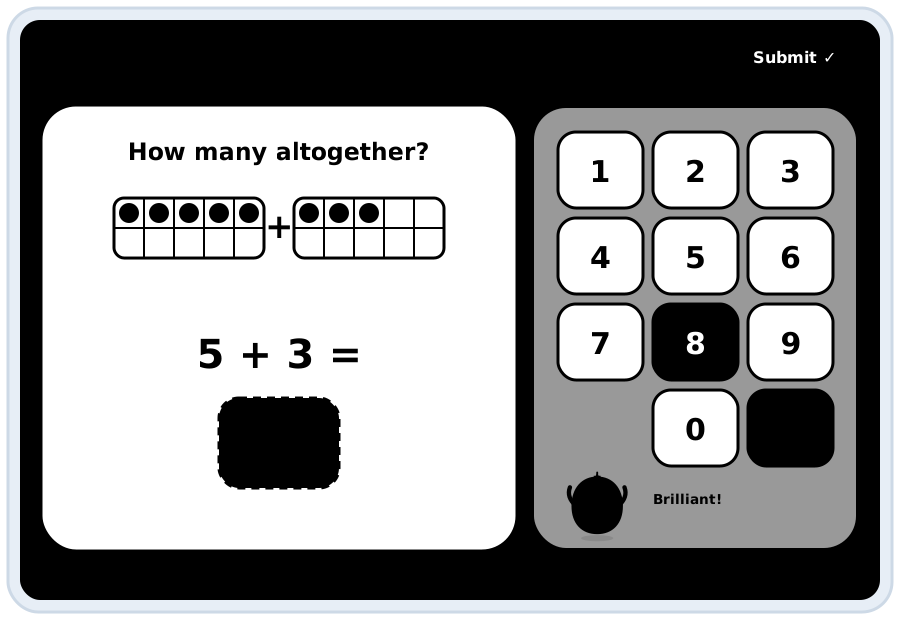
A maths round using ten-frames before symbols, with a number keypad and Numi cheering

Maths

Concrete → Representational → Abstract
New ideas start with things kids can see and count - counters, ten-frames - then move to number lines and arrays, and only then to bare equations. Answers are checked deterministically: real maths, never a guess-y AI.

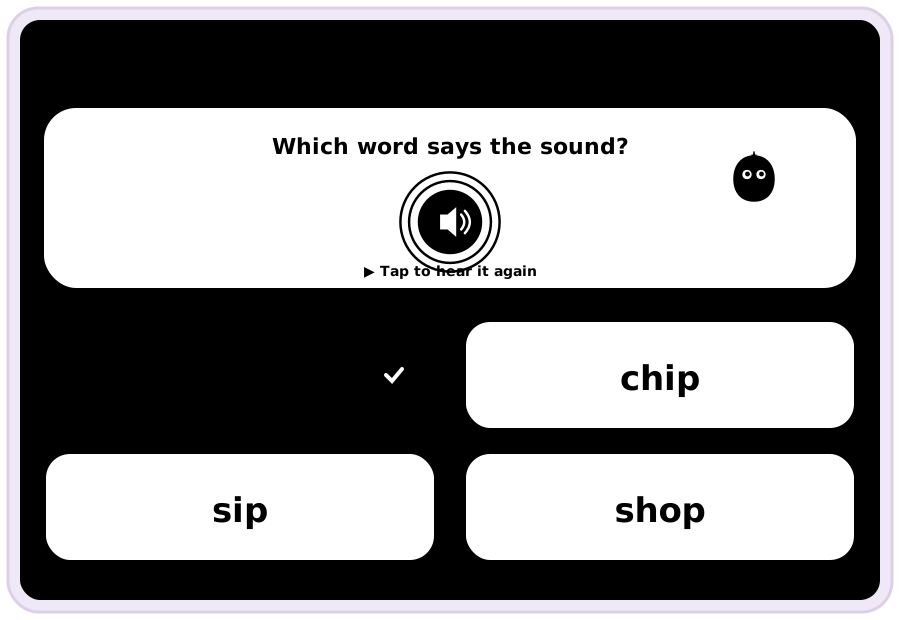
A reading round where the child listens to a word and chooses the matching tile

Reading

Audio-led, phonics-first

Every prompt is spoken aloud, so pre-readers can play independently. Children match sounds, choose graphemes, build and segment words, and practise reading aloud - with a grown-up tap to confirm.

Confidence, not just correct answers

Ziado tracks a confidence score for every skill. A skill only counts as mastered when your child demonstrates it across different representations - not by repeating the same drill five times. That's why progress in Ziado means something.

Progress follows your child

Banked stars, streaks and per-skill mastery are saved centrally. Start on the family tablet, continue on a laptop at Grandma's - the galaxy is always exactly where they left it.

See where your child would start.

The loop begins with a free 10-minute check - no account, no card.

Try the free check
Try the free check