Length and distance explained for parents (Australia)
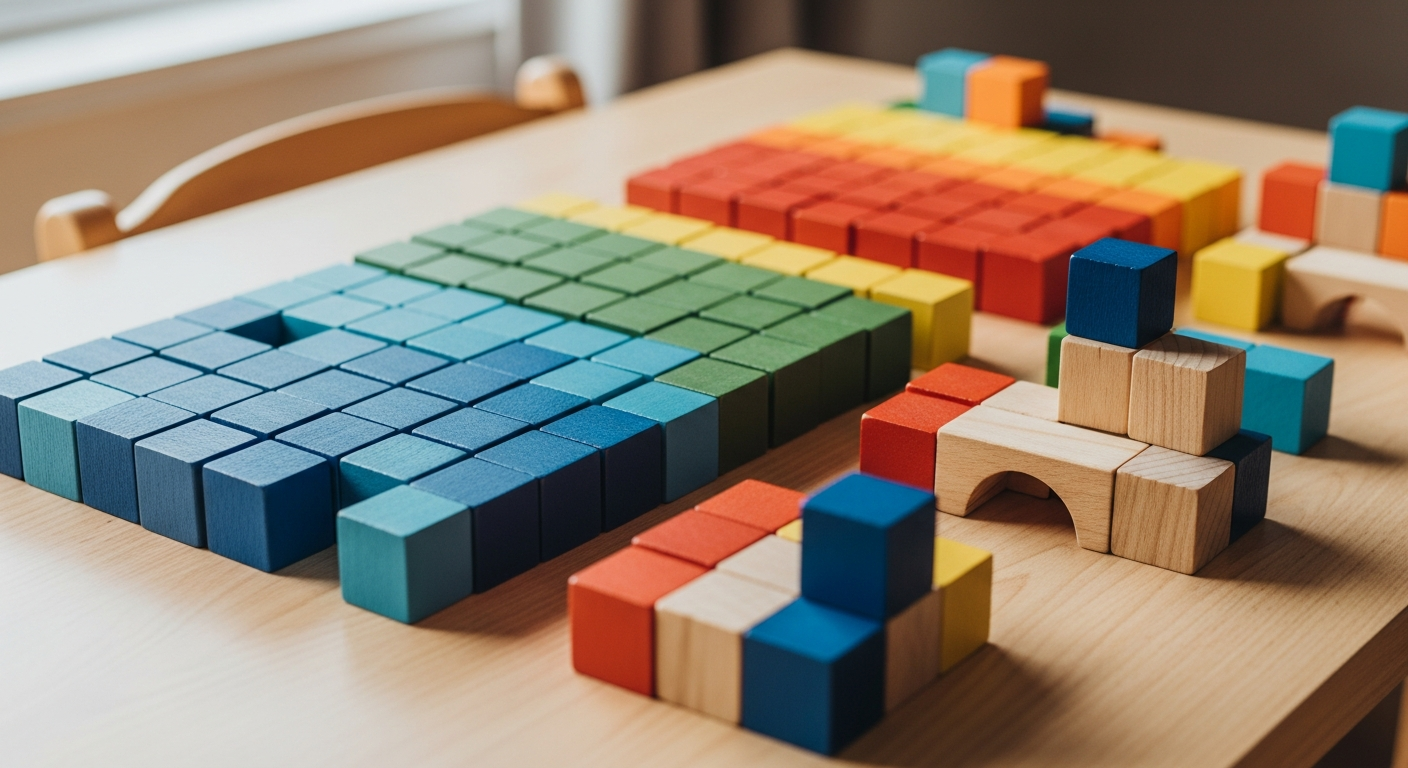
Homework says which is longer? or about how many centimetres? - and Australian parents reach for ruler language that does not quite match the worksheet. Schools talk about length, distance, centimetres, metres, kilometres, longer, shorter and height. Same strand of measurement: how long something is (or how far it is from here to there), and later how we name that length with metric units.
This guide unpacks length and distance for Prep–Year 4 with plain language, compare-with-objects then informal units then cm/m/km, and calm home games. It sits beside capacity and volume (how much a container holds - sibling measurement topic), mass and weight (how heavy something is - shipping), area vs perimeter (fence vs fill on shapes), money maths at home (another everyday metric strand), and the year maps from Prep through Year 4 maths. It is not an area, capacity or mass page - those are different measurement questions.
The big idea: how long, how far, how tall
Length is how long an object is from end to end - a pencil, a book, a table. Distance is how far it is between two places - bedroom to kitchen, school gate to classroom. In early primary the same metric tools (cm, m, km) cover both ideas.
Height is length standing up: how tall a child is, how high a doorway is. Worksheets often still say length or measure the height in centimetres. Families say tall; schools measure height as a length attribute. No physics lecture needed - match the homework word.
A quick parent check: if the question says longer, shorter, taller, centimetres, metres, kilometres, ruler or how far, you are on this page. If it says holds, millilitres or litres, that is capacity and volume. If it says heavier, grams or kilograms, that is mass and weight. If it says around the edge or cover the shape, that is area vs perimeter.
Teachers may say longer, shorter, taller, about the same, centimetres (cm), metres (m), kilometres (km) or estimate then check. Australian Curriculum Mathematics (version 9) builds comparing length in Foundation, informal then formal metric length through Years 1–3, and richer unit sense into Year 4 (Foundation–Year 4). Echo the phrases your child's class uses.
Start with comparing objects, not the ruler
Abstract centimetre questions land better after one concrete story:
- Put out two pencils, two books, or a shoe and a ruler lying side by side.
- Line up one end carefully (flush edges matter).
- Ask: which is longer? Which is shorter? About the same?
- Say aloud: "This pencil is longer" or "they look about the same."
Children who only memorise "1 m = 100 cm" without lining objects up often guess when a tilted or thicker line looks longer - the classic length illusion.
At home: keep sessions short. Celebrate the sentence ("the blue book is longer"), not speed. Rulers come after comparing feels honest.
Informal units before centimetres
Before formal metric units, schools often use hand spans, footsteps, paperclips or blocks: place end to end without gaps, then count.
Example: "It takes six paperclips to measure the pencil." The paperclip is the informal unit; six is the length in those units.
Only after that picture is steady do cm and m earn their keep. Rushing straight to a 30 cm ruler without comparing first creates tears on homework nights.
Centimetres, metres and kilometres (the everyday metric ladder)
Australian primary work uses:
- centimetre (cm) - small lengths (finger width ≈ 1 cm; pencils often ~15–18 cm)
- metre (m) - larger lengths (classroom door ≈ 2 m tall)
- kilometre (km) - longer distances (home to school) - idea from later Year 2–3, richer number work into Year 4
Bridges: 1 m = 100 cm. 1 km = 1000 m. Half a metre is 50 cm. A school ruler is usually 30 cm - start at zero, not at 1.
At home: measure three real things (book, table edge, height on the wall). Ask "cm or m?" then "how many cm make 1 m?" Place value helps rename 100 cm as 1 m honestly.
Height tip: "How tall are you?" is length measured up - same units. Wall mark with a book on the head; celebrate the unit, not sibling rivalry.
Year-by-year feel (Prep–Year 4)
Prep / Foundation: compare and order by length (longer / shorter / taller / about the same); informal units if the class uses them. No formal cm needed for home play. Year map: Prep maths.
Year 1–2: informal units first, then cm and m with rulers; estimate then check; simple "how far?" language. Year maps: Year 1, Year 2 maths.
Year 3: confident cm/m, reading rulers and tapes, sensible units, early km sense. Year map: Year 3 maths.
Year 4: convert related metric length units; estimate-and-calculate problems. Year map: Year 4 maths.
Timing varies - ask what phrase and tools your child's class uses this term.
Length is not area, capacity or mass
Four measurement mix-ups parents hear in the same week:
- Length / distance / height - how long, how far, how tall (this page).
- Area / perimeter - fence vs fill on a flat shape (area vs perimeter).
- Capacity / volume - how much a container holds (capacity and volume).
- Mass / weight - how heavy something is (mass and weight).
A ribbon can be long (length), wrap around a box (perimeter), while the box holds toys (capacity) and weighs something (mass) - but worksheets usually ask one idea. Words like longer, cm, m, km, ruler, how far and height point here.
Perimeter still uses length units, but the job is fencing the edge - keep that on area vs perimeter when worksheets mix both.
A simple weekly home routine
- Two minutes of naming - point at a pencil, a book and a shoe: "which is longer?"
- Three minutes of compare-then-check - line up ends, predict, then check with a ruler or tape if you have one.
- Three minutes of units - find cm or m on one label or ruler; say the number aloud.
- Optional estimate - "Is this desk closer to 50 cm or 2 m wide?" Then check.
Stop while it is still friendly. If measurement nights tip into worry, shrink the session and see maths anxiety in primary kids.
Games that do not feel like homework
Longer/shorter hunt. Find something longer than a spoon and shorter than a shoe. Celebrate the sentence.
Hand-span measure. Measure the couch in hand spans, then footsteps - different units, different counts.
Ruler start-at-zero. Object at the zero end (not at 1); read the far end.
Height wall mark. Once a month, mark height in cm - growth maths, not sibling rivalry.
Money-adjacent tape. Ribbon sold by the metre invites price and length - light link to money maths, not a shopping drill.
Keep games under ten minutes. Win = honest comparing and sensible units.
Common mix-ups (and kinder fixes)
Starting the ruler at 1. Length runs from 0 to the end mark - flush with zero, read once.
Gaps and overlaps. Informal units must sit end to end. Model one careful line, then recount.
Mixing cm and m. "Two metres" is not "2 cm". Match the unit; convert with 100 when needed (place value).
Judging by thickness or tilt. Line objects up side by side instead of another lecture.
Mixing strands. Perimeter/area → area vs perimeter. Holds → capacity. Heavy → mass. Longer/how far/height → here.
If wobbles sit inside a broader "are they behind?" worry, see Is my child behind in maths?.
How this links to other guides
- Capacity and volume - how much a container holds (sibling measurement topic)
- Mass and weight - how heavy something is (sibling measurement topic; shipping)
- Area vs perimeter - fence vs fill on shapes (sibling measurement topic)
- Money maths at home - everyday metric and number sense at the kitchen table
- Prep maths - early comparing language including length
- Year 1 / Year 2 / Year 3 / Year 4 maths - year maps where length and metric units appear
- Place value explained - renaming 100 cm as 1 m honestly
- Homework without tears - calm short sessions when worksheets stack up
- Maths anxiety in children / behind in maths? - when nights feel tense or "behind" worries grow
- Maths help hub - more parent maths guides
A useful parent-teacher question: "Are you practising length with comparing and informal units this term, and which tools (hand spans, cm rulers, metres) should we use at home?"
FAQ
When do children learn centimetres and metres at school?
Comparing length starts in Prep. Informal units then cm/m strengthen across Years 1–3; km and conversions into Year 4. Ask what tools and wording your child's class uses.
Is height the same as length?
Height is length measured upright. Same units (cm/m). Match the worksheet word (height, tall, length).
Do we need a fancy tape measure?
No. Objects to compare, paperclips or blocks, and a 30 cm ruler are enough. A tape helps for height later.
Is this the same as area, capacity or mass?
No. Length/distance/height is how long or how far. Area/perimeter is fence vs fill. Capacity is how much holds. Mass is how heavy. Different questions, different units.
A calm next step
When length comparisons feel clear (with matching units on simple rulers) and you want a wider number-and-measurement snapshot at home, Ziado's free check is a one-off, roughly 10-minute adaptive diagnostic with partial results only - no account and no card. The full placement unlocks after signup. It is not NAPLAN practice and it is not the full product; Ziado's ongoing path is adaptive maths (Foundation–Year 6) plus phonics reading (Foundation–Year 4). Explore Ziado maths if you want practice that can meet measurement and number skills at the right step. Individual and Family plans, if you continue later, start with a 14-day free trial of the full app — see pricing for current plans.
Length measures how long; sorting circles, squares and triangles is 2D shapes explained for parents.
Length measures how long; real-world solids sit in 3D shapes explained for parents.
Length is how long; lines of symmetry and mirror flips are symmetry explained for parents.
Length is how long; corners and turns are angles explained for parents.
Near/far is position talk before formal length — see position and location for parents.
Curious where measurement sits for your child?
Ziado's free check is a one-off, roughly 10-minute adaptive diagnostic with partial results only - no account, no card. The full placement unlocks after signup.
Start the free maths check