Partitioning explained for parents (Australia)
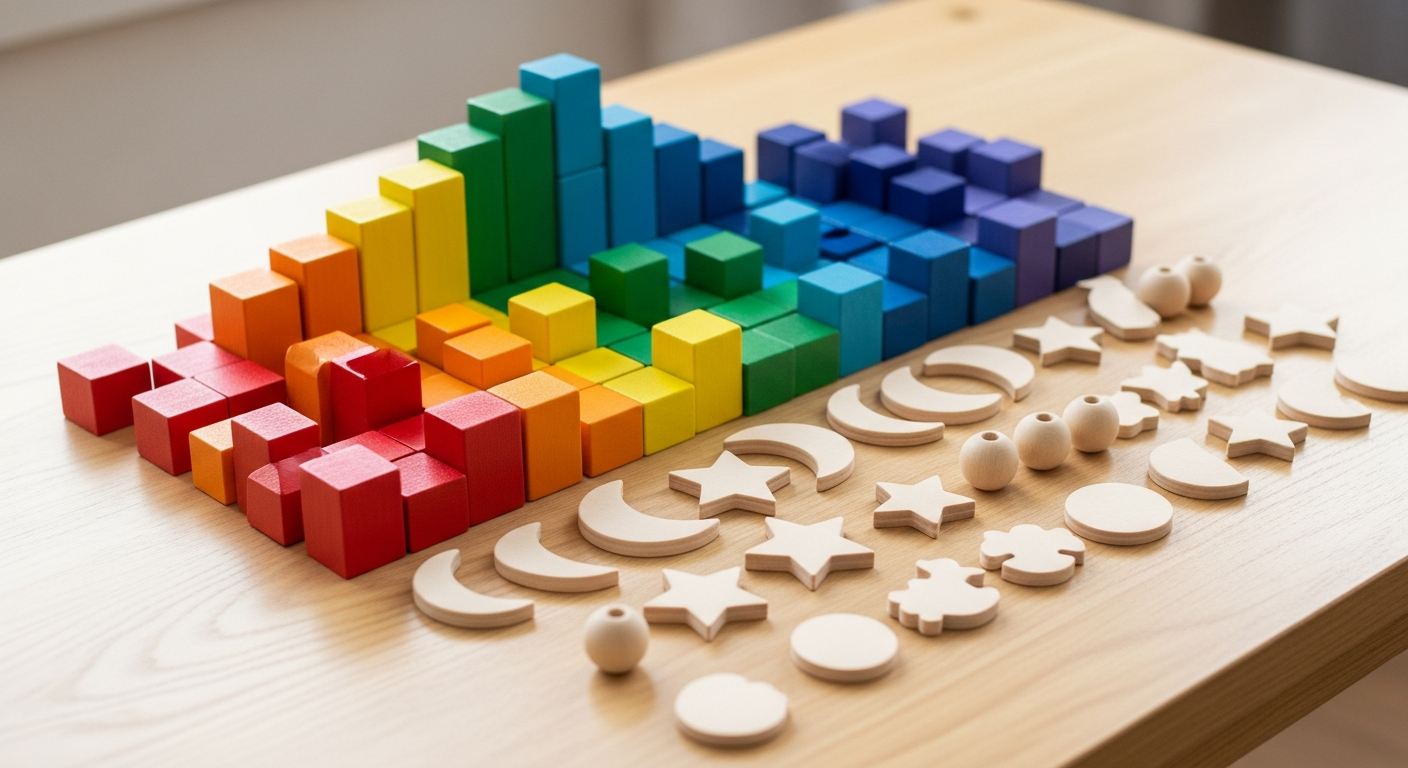
Homework says partition 47 or break 36 into tens and ones - and Australian parents wonder if that means place value, a bar diagram, or an addition trick. Schools talk about partitioning, breaking numbers into parts, and flexible splits. Same idea: a number can be split in useful ways so calculating and understanding get easier - for example 47 as 40 + 7, or 47 as 30 + 17, depending on the job.
This guide owns that splitting skill for Prep–Year 3 with counters and base-10 before worksheets. It sits beside part-part-whole (the model / diagram of two parts make a whole), split-add-join (an addition strategy that uses splits), place value and bundling tens (tens-and-ones structure), and number bonds (known pairs). Year maps: Prep–Year 3 maths.
The big idea: split a number in useful ways
Partitioning means breaking a whole number into parts that help you think. The parts must still make the same whole - but you choose the split for the job:
- 47 = 40 + 7 (place-value friendly tens and ones)
- 47 = 30 + 17 (handy when you need to bridge or rename)
- 47 = 45 + 2 (handy when you are near a friendly five or ten)
- 8 = 5 + 3 or 8 = 4 + 4 (small-number flexibility in Prep / Year 1)
Say it aloud: "Same number - different useful parts." That flexibility is the win. A child who only ever sees 47 as "four and seven" on a worksheet misses the muscle that later addition, subtraction and mental maths lean on.
Australian Curriculum Mathematics (version 9) builds partitioning and flexible number sense strongly across Foundation to Year 3 (Foundation–Year 3). Classroom labels vary (partition, break apart, decompose, split); echo your child's teacher.
A quick parent check: break into parts / another way to make / split 47 → this page. Bar or circle with parts and whole → part-part-whole. Split, add, join a sum → split-add-join. Tens and ones columns / renaming → place value. Ten sticks / bundling → bundling tens. Friends of ten → number bonds.
Concrete first: counters and base-10 before worksheets
Abstract "write two ways to partition 36" lands better after hands-on splits:
- 1. Count out 36 counters (or pasta, snack pieces). That pile is the whole.
- 2. Push them into three tens and six ones - say "thirty-six is thirty and six" (or four tens would be too many - stay honest to the count).
- 3. Push again into two tens and sixteen ones - "thirty-six is twenty and sixteen." Same whole; different parts.
- 4. Push a third way if energy allows: thirty-five and one, or twenty-five and eleven.
Base-10 blocks or bunched ten-sticks make the tens feel real - see bundling tens and place value for the structure language. Keep the partitioning praise on the flexible split: "You found another useful way to break it."
At home: celebrate same total, different parts before a perfect worksheet. Keep sessions under ten minutes. Counters first; jotting second.
Not the same as part-part-whole, split-add-join, or place value
Parents often hear five labels in one week and wonder if they are one topic.
- Partitioning (this page) is the skill of splitting a number in useful ways for thinking and calculating.
- Part-part-whole is the model / diagram: two parts make a whole; the whole can split into parts. Partitioning uses that relationship; PPW owns the picture.
- Split-add-join is an addition strategy: split an addend, add the friendly parts, join the total. It uses partitioning; it is not the whole skill.
- Place value and bundling tens own tens-and-ones structure (why 47 is 4 tens and 7 ones). Partitioning often uses that structure - and also allows non-standard splits (30 + 17).
- Number bonds are known pairs (especially friends of ten). Bonds are fuel for many splits; partitioning is choosing which split helps now.
Link them gently: "First feel that numbers can break apart; then use place-value language; then apply a split inside an addition strategy when the sum needs it."
Useful splits parents meet in Prep–Year 3
Small-number ways (Prep / Year 1). Make 6 as 5 + 1, 4 + 2, 3 + 3. The point is flexibility, not one "correct" pair. Bonds deepen those pairs later (number bonds).
Tens-and-ones split. 58 = 50 + 8. The standard place-value jacket - essential, but not the only jacket (place value).
Non-standard but useful. 58 = 40 + 18 (handy before renaming in subtraction). 58 = 60 − 2 thinking is related but different - stay with additive parts first for this page.
Near-ten / near-friendly. 39 = 40 − 1 for some stories, or 39 = 30 + 9 for others. Choose the split that matches the homework job.
Stick to break / partition / another way to make / tens and ones lightly until the class goes further. Formal algebra-style decomposition can wait.
Year by year: where partitioning shows up
Prep - after children can count a set, many classes partition small collections ("make 5 in different ways") with counters and talk (Prep maths). Spoken "another way" is the win; formal jotting stays light.
Year 1 - firmer splits within 20; bonds that fuel partitions; early tens language appears (Year 1 maths, number bonds).
Year 2 - two-digit partitioning (standard and useful non-standard); splits inside mental addition (Year 2 maths, split-add-join, place value).
Year 3 - flexible splits as a check beside written methods; renaming stories lean on useful partitions (Year 3 maths, bundling tens).
If wobbles sit inside a broader worry, see Is my child behind in maths?, maths anxiety, and homework without tears.
Common mix-ups (and kinder fixes)
Thinking partitioning only means tens and ones. Fix: ask for two ways - one standard (40 + 7) and one useful other way (30 + 17). Place value owns the standard jacket; this page owns the flexibility.
Confusing the skill with the part-part-whole diagram. Fix: "Are we filling a bar/circle model, or choosing how to break a number?" Point to part-part-whole for the diagram.
Treating every split as a split-add-join sum. Fix: partitioning can stand alone ("show 47 two ways") without adding a second number. When the homework is 47 + 25, then open split-add-join.
Only writing digits without objects. If the child cannot show 36 as twenty and sixteen with counters or sticks, pause the sheet. Build the pile first; then copy the split onto paper.
Random splits that do not help. "7 + 40" for 47 is fine mathematically - but ask "Which split makes the next job easier?" Prefer tens chunks, bonds, or near-friendly numbers when calculating.
Racing past Prep flexibility. Children who never played "another way to make 8" often freeze later on two-digit breaks. Keep small-number play alive.
Home games that do not feel like worksheets
Pile split. Count a snack pile (the whole). Child splits into two groups and names both parts. Rejoin. Split a different way. Same whole - praise the second way most.
Base-10 rebuild. Show 4 ten-sticks and 7 ones (47). Ask: "Can you show forty-seven with three tens and some ones?" (3 tens + 17 ones.) Hands-on renaming without a worksheet scare.
Two-way card. Write a two-digit number. Child jotting: way A (tens + ones) and way B (another useful split). Say both aloud.
Bond inside a partition. Flash a friends-of-ten pair; child builds that as one part of a larger whole - see number bonds.
Strategy link (when ready). Give a sum like 38 + 27; ask which split of 27 helps - then walk split-add-join once.
Keep each game under ten minutes. Stop while it is still friendly. Rushing blanks without one concrete split creates tears on homework nights.
A simple weekly home routine
- 1. Two minutes of naming - show a number with counters or sticks; name one standard split (tens and ones lightly).
- 2. Five minutes of one game - pile split, base-10 rebuild, or two-way card.
- 3. Three minutes of a soft link - for ready children, one addition story that uses a useful split - see split-add-join - or a part-part-whole bar that shows the parts - see part-part-whole.
If nights fray, shorten further - see homework without tears.
How this links to other guides
- Part-part-whole explained for parents - the model / diagram (parts ↔ whole); not the flexible-split skill
- Split-add-join explained - addition strategy that uses partitioning
- Place value explained for parents - tens and ones structure under many splits
- Bundling tens explained - ten-sticks / grouping that make place-value splits feel real
- Number bonds explained for parents - known pairs that fuel many useful splits
- Prep / Year 1 / Year 2 / Year 3 maths - year maps where partitioning sits
- Homework without tears - calm short sessions when worksheets stack up
- Maths anxiety / behind in maths? - when nights feel tense or "behind" worries grow
- Maths Help hub - more parent guides
Ask the teacher: "When you say partition, do you want the standard tens-and-ones split, another useful way, or a split inside an addition strategy?" Matching language reduces crossed wires.
FAQ
Is partitioning the same as part-part-whole?
No. Part-part-whole is the model (parts and whole). Partitioning is the skill of choosing useful ways to break a number. The model shows the relationship; partitioning practises flexible splits (part-part-whole).
Is it the same as split-add-join?
No. Split-add-join is a strategy for adding that leans on partitioning. This page owns breaking numbers into useful parts even when there is no sum yet (split-add-join).
Is partitioning just place value?
Place value and bundling tens explain why tens and ones work. Partitioning includes those standard splits and other useful breaks (like 47 as 30 + 17). Structure pages: place value, bundling tens.
Do we need special materials?
No. Counters, pasta, snack pieces, drawn sticks, or bunched pencils-as-tens are enough. Hands-on first; worksheets after one concrete split.
A calm next step
When "same number, different useful parts" feels settled and you want a wider number-skill snapshot at home, Ziado's free check is a one-off, roughly 10-minute adaptive diagnostic with partial results only - no account and no card. The full placement unlocks after signup. It is not NAPLAN practice and it is not the full product; Ziado's ongoing path is adaptive maths (Foundation–Year 6) plus phonics reading (Foundation–Year 4). Explore Ziado maths if you want practice that can meet early number skills at the right step. Individual and Family plans, if you continue later, start with a 14-day free trial of the full app — see pricing for current plans.
Curious where partitioning sits for your child?
Ziado's free check is a one-off, roughly 10-minute adaptive diagnostic with partial results only - no account, no card. The full placement unlocks after signup.
Start the free maths check