Patterns explained for parents (Australia)
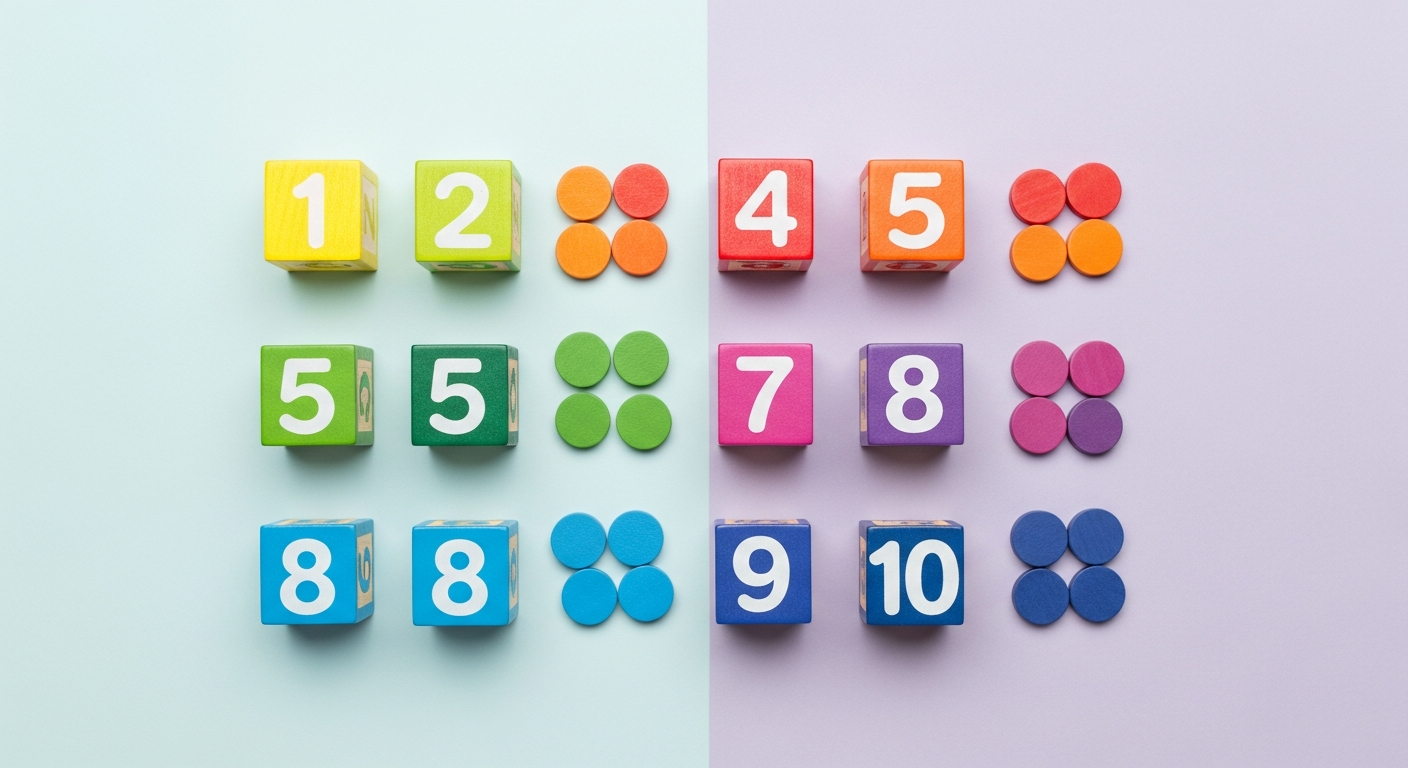
Homework says continue the pattern, what comes next? or copy the repeating unit - and Australian parents start lining up fridge magnets by colour. Schools talk about patterns, repeating patterns, growing patterns, and colour / shape / number patterns. Early algebra here is about noticing what repeats or grows - not naming every flat shape, and not chanting skip-counts as a times-tables drill.
This guide unpacks patterns for Prep–Year 3 with plain language, hands-on sorting before worksheets, and calm home practice. It sits beside skip counting (equal jumps as a counting skill), equal groups (multiplication meaning), 2D shapes (naming sides and corners), 3D shapes, symmetry, and year maps from Prep through Year 3 maths. It is not a skip-count, equal-groups or shape-names page - repeating units, growing rules and "what comes next" own this thread.
The big idea: a rule you can say (and check)
A pattern follows a rule. In a repeating pattern, a small chunk (the unit or core) comes back again and again: red-blue, red-blue, red-blue… or circle-square-triangle, circle-square-triangle…. In a growing pattern, something changes in a steady way: 1 block, then 2, then 3; or 2, 4, 6 with a clear "add 2 each time" story.
Teachers may also say copy the pattern, extend, what comes next?, unit of repeat, AB / ABC pattern, or growing / increasing. Same family of ideas. Australian Curriculum Mathematics (version 9) builds noticing, copying and continuing patterns across the early years (Foundation–Year 3). Echo your child's class phrases.
A quick parent check: "what comes next?", repeating unit, growing rule, colour/shape/number patterns → this page. Count by twos / fives as equal jumps toward tables → skip counting. 3 groups of 4 → equal groups. How many sides? / what shape? → 2D shapes.
Hands-on first (worksheets second)
Abstract "circle the next picture" quizzes land better after one concrete story:
- 1. Line up three objects: red, blue, red, blue, red… (pause).
- 2. Ask: "What is the little chunk that keeps coming back?" (red-blue).
- 3. Ask: "What comes next?" (blue).
- 4. Say aloud: "The unit is red-blue - it repeats."
Children who only colour worksheet blanks without building a unit often guess from the last colour they liked. Build; name the rule; then extend. Prep may only need two-colour repeats. Years 1–3 add longer units, shape and number patterns, and growing patterns when the class asks.
At home: celebrate the sentence ("red-blue repeats") before a perfect worksheet row. Keep sessions short.
Pattern language parents meet in Prep–Year 3
Repeating patterns. The unit comes back unchanged. AB (red-blue), ABC (circle-square-triangle), AABB (clap-clap-stomp-stomp). The skill is finding the unit - not only guessing the next item by luck.
Growing patterns. Something gets bigger (or smaller) by a steady rule: add one each time, add two, double the towers. Number growing patterns can look like skip-counting - but homework still asks for the rule and next term, not a 5× drill. Keep skip counting as the counting-skill sibling when the night is equal jumps toward multiplication.
Colour, shape and number patterns. Same idea, different materials. Beads and fridge magnets (colour), paper shapes (shape), number cards or counters (number). Shape patterns use shape as the attribute that repeats - they are not a full 2D shapes naming quiz.
Copy, continue, create. Copy what is shown; continue ("what comes next?"); create a new pattern with the same kind of rule. Creating is often the hardest - and the most useful check that the child owns the rule.
Stick to repeating / growing / unit / what comes next / colour-shape-number until the class goes further.
Real-world patterns before worksheets
Schools often ask children to identify, copy, continue or create patterns. A sock drawer, a Lego tower and a clap-stomp rhythm teach more in five minutes than ten unmarked boxes.
At home: "Show me the repeating chunk." "What comes next - and how do you know?" "Can you make a growing tower that adds one each time?" Rushing blanks without a built unit creates tears on homework nights.
Link gently to shape names ("that tile is a square") without a full 2D shapes drill. Matching halves → symmetry. Solids → 3D shapes. Turns and corners → angles.
Year-by-year feel (Prep–Year 3)
Prep / Foundation: notice and copy simple repeating patterns with colour, sound or movement (clap-stomp, red-blue). "What comes next?" with a clear unit. Year map: Prep maths.
Year 1: longer units (ABC, AABB); continue and describe the rule in plain words; begin simple growing patterns with objects. Year map: Year 1 maths.
Year 2: create as well as copy; mix colour, shape and number attributes; growing number patterns with a sayable rule ("add 2 each time"). Year map: Year 2 maths.
Year 3: clearer growing rules; patterns that support later number work without becoming a full skip-count or equal-groups lesson unless the class links them. Map: Year 3 maths.
Ask which words (pattern, repeat, unit, growing, extend) your child's class uses this term.
Patterns are not skip-counting (and not equal groups or shape names)
Mix-ups parents hear in the same week:
- Patterns / repeating / growing / what comes next - a rule you can say and check (this page).
- Skip counting - equal jumps as a counting skill toward tables (skip counting).
- Equal groups - multiplication meaning with separate piles (equal groups).
- 2D shapes - flat drawings with sides and corners (2D shapes).
- Symmetry - matching halves, mirror, flip (symmetry).
A row of numbers can be a growing pattern and a skip-count - two different questions. "What comes next / what is the rule?" → this page. Count-by fluency → skip counting. "3 groups of 4" → equal groups.
A simple weekly home routine
- 1. Two minutes of notice - spot one pattern in the room (tiles, socks, bookshelf colours) and say the unit aloud.
- 2. Three minutes of build - make a repeating pattern with toys or paper shapes; ask "what is the chunk that repeats?"
- 3. Three minutes of next - hide the end and ask "what comes next - and why?"
- 4. Optional grow (when the class asks) - build towers that grow by one or two each time; say the rule.
Stop while it is still friendly. If pattern nights tip into worry, shrink the session and see maths anxiety in primary kids.
Games that do not feel like homework
Fridge-magnet AB. Two colours only. Build red-blue-red-blue; pause before the next; child places it and names the unit.
Clap-stomp code. Body patterns: clap-stomp-clap-stomp, or clap-clap-stomp. Continue together; then invent a new unit.
Shape train. Cut or draw circle-square-circle-square. Ask what comes next before naming every shape property - naming stays light; the rule owns the night (2D shapes if they want a deeper shape dig later).
Growing Lego. Towers of 1, 2, 3, 4… or 2, 4, 6… Say "add one" or "add two" each time. If the talk slides into "count by twos for tables," park that on skip counting.
Keep games under ten minutes. The win is a clear rule and a calm "what comes next."
Common mix-ups (and kinder fixes)
Guessing the next item from the last colour they like. Ask for the unit first: "Show me the chunk that repeats." Then predict.
Thinking every number row is skip-counting practice. Growing-pattern homework wants the rule and the next term. Fluency count-bys are a different night - see skip counting.
Turning a shape pattern into a full shapes test. Use shape as the attribute; save "how many sides?" for 2D shapes.
Mixing patterns with equal groups. Separate equal piles for × meaning stay on equal groups.
Racing long worksheet rows before one built unit. Build once; name the rule; then do a short continue.
If wobbles sit inside a broader "behind?" worry, see Is my child behind in maths?.
How this links to other guides
- Skip counting - equal jumps as a counting skill (sibling number topic)
- Equal groups - multiplication meaning with separate piles (sibling number topic)
- 2D shapes - flat sides and corners (sibling geometry topic)
- 3D shapes - solids you can hold (sibling geometry topic)
- Symmetry - matching halves, mirror, flip (sibling geometry topic)
- Angles - turns, right angles, corners (sibling geometry topic)
- Prep maths - early pattern language in the year map
- Year 1 / Year 2 / Year 3 maths - year maps where pattern language appears
- Homework without tears - calm short sessions when worksheets stack up
- Maths anxiety in children / behind in maths? - when nights feel tense or "behind" worries grow
- Maths help hub - more parent maths guides
A useful parent-teacher question: "Which pattern words (repeat, unit, growing, extend) should we practise at home this term?"
FAQ
When do children learn patterns at school?
Noticing and copying simple repeating patterns often starts in Prep. Continuing, describing and creating patterns - including growing patterns - strengthens across Years 1–3. Ask which wording your child's class uses.
What is a repeating pattern in plain English?
A repeating pattern has a small chunk (the unit) that comes back unchanged - like red-blue, red-blue, red-blue. The key skill is naming that chunk, then saying what comes next.
What is a growing pattern?
A growing pattern changes by a steady rule - add one each time, add two, and so on. Number growing patterns can look like skip-counts; if homework wants the rule and next term, stay here. If it wants count-by fluency toward tables, see skip counting.
Do we need equal groups or shape names now?
Not for pattern homework. Separate equal piles for multiplication meaning sit on equal groups. Shape names and properties stay on 2D shapes - shape patterns only use shape as the repeating attribute.
A calm next step
When repeating-unit and "what comes next" talk feels clear (and a few growing rules stick without tears) and you want a wider number-and-shape snapshot at home, Ziado's free check is a one-off, roughly 10-minute adaptive diagnostic with partial results only - no account and no card. The full placement unlocks after signup. It is not NAPLAN practice and it is not the full product; Ziado's ongoing path is adaptive maths (Foundation–Year 6) plus phonics reading (Foundation–Year 4). Explore Ziado maths if you want practice that can meet pattern and number skills at the right step. Individual and Family plans, if you continue later, start with a 14-day free trial of the full app — see pricing for current plans.
Patterns are “what comes next”; beside/above/near is position and location for parents.
Patterns ask what comes next; tallies and picture graphs sit in data and graphs explained for parents.
Patterns ask what comes next; certain/possible/impossible language is chance and probability for parents.
Patterns of hours and 5-minute jumps show up in elapsed time for parents.
Curious where pattern and number sit for your child?
Ziado's free check is a one-off, roughly 10-minute adaptive diagnostic with partial results only - no account, no card. The full placement unlocks after signup.
Start the free maths check