Making connections while reading explained for parents (Australia)
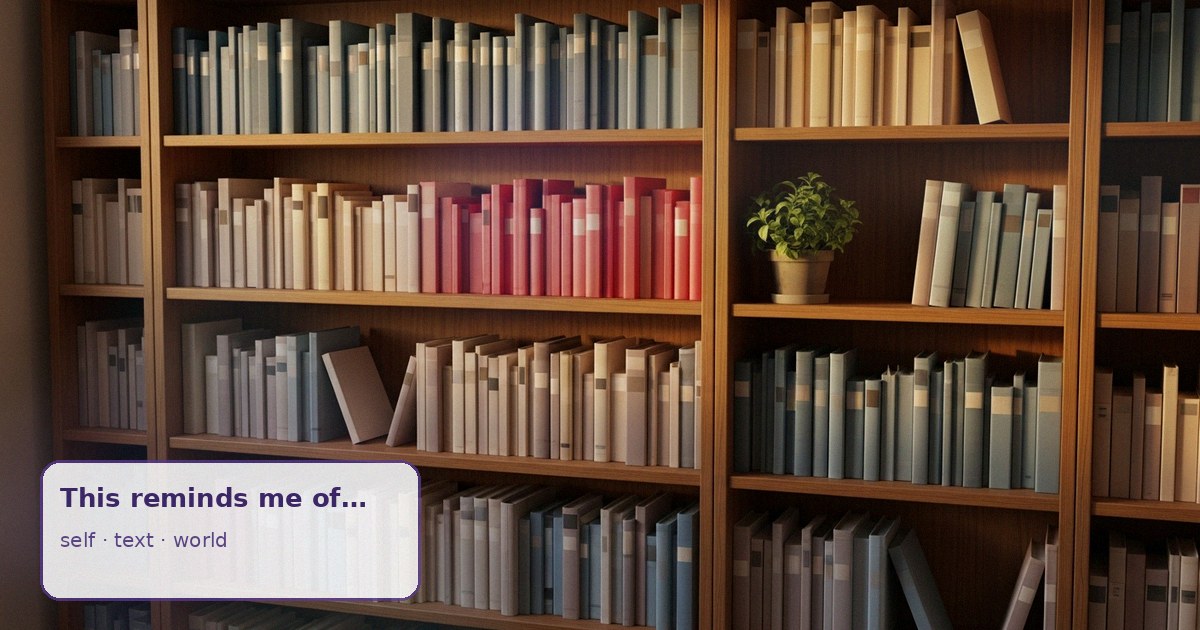
Making connections while reading means linking what is on the page to something the child already knows — text-to-self (this reminds me of when I…), text-to-text (this is like that other book / film), or text-to-world (this is like something in real life) — then tying the link back to the words, so the story or article gets richer, not replaced by a long chat. After Mum packed the esky for the beach, a child might say That reminds me of our trip to Torquay and then notice Oh — they're going early because of the tide. That connect-and-return-to-text habit is the skill. Australian Prep–Year 6 classrooms practise it from early “this reminds me of…” talk through denser chapter and non-fiction stretches; it usually deepens in Years 1–5 as texts invite clearer links without endless personal stories.
That is a different job from inference, questioning, predicting, visualising, clarifying, main idea, or summarising. Fluency (reading fluency, robot reading) frees attention for connecting; it is not connecting itself. And this page is not the full comprehension strategies at home umbrella. That page owns the set (including connect); this page owns connections teach-through — text-to-self / text-to-text / text-to-world, oral this reminds me of…, Prep–Year 6 — tethered to the text, not a phonics deep dive.
This guide covers what making connections means, how it differs from sibling skills, oral before worksheets, Prep–Year 6 expectations, short home games, and light links to phonics, decodables, and year reading maps.
Connections vs inference vs questioning vs predicting
Mixing these labels causes homework friction. Keep the tools clear:
| Idea | What it is | Example |
|---|---|---|
| Making connections | Link text → self / other text / world, then return to the page | “This reminds me of… and in the story that means…” |
| Inference | Clues + prior knowledge → meaning not stated outright | Door slam → “she's cross” (inference) |
| Questioning | Wonder / ask before–during–after | “Why is the towel empty?” (questioning) |
| Predicting | Guess what happens next, then check | “I think the cat will hide” → revise (predicting) |
| Visualising | Build a mental movie from the words | “I can feel the wet sand” (visualising) |
| Clarifying | Notice meaning broke → fix-up (stop, reread, check) | “That didn’t make sense — I’ll reread” (clarifying) |
| Main idea | What the whole stretch is mostly about | The dog finds its way home (main idea) |
| Summarising | Retell the gist in fewer words | Lost dog → help → home (summarising) |
So connecting is not a free-for-all memory lane. It is one short link that helps the text make more sense. Kitchen shorthand: “This reminds me of Grandma’s garden — and here the character is planting tomatoes too” (connection); inventing a long story about Grandma while the book sits closed (drift).
What Australian schools mean by "make a connection"
Programs vary. Teachers may say make a connection, text-to-self, text-to-text, text-to-world, schema, this reminds me of…, or link to what you know. Parent translation: use what you already know to deepen understanding of this page — without turning bedtime into a lecture about “activating schema.”
Typical early moves: one oral this reminds me of…; name which kind (self / text / world) when helpful; ask how does that help us understand this bit?; keep the book open; later, choose the link that best fits the evidence on the page.
The Australian Curriculum: English expects growing skill at drawing on personal knowledge and comparing texts while staying grounded in what is written. Follow this fortnight's classroom language. Year maps: Prep reading, Year 2, Year 3, Year 4, Year 5, Year 6. A Year 1 Phonics Check is about decoding — not a connections quiz.
Decode first (mostly), then connect for meaning
Working memory is limited. Useful connections need decent decoding. When almost every word costs effort, “this reminds me of…” becomes a stall — or a prompt to invent from the picture while skipping letters (word guessing). Matched text is the precondition. If sounding out is still fragile, start with phonics, phonemic awareness, tricky / heart words, and decodable readers before pushing hard on connection talk.
On a tough night: use easier print for one connect-and-return beat and keep the hard book as a read-aloud, or free the brain with a calm re-read first (fluency, robot reading). Never let a long personal story replace reading the page.
Oral "this reminds me of…" first — then worksheets
Connections are easier when talk leads the eye — same calm spirit as homework without tears.
Oral first (Prep–Year 2 especially): you model one short link (“This reminds me of our rainy walk — and in the story they're puddle-jumping too”); invite one this reminds me of…; ask how does that help us understand this bit?; enjoy the book.
Then print / light recording (as decoding allows): short matched stretch; one connection; name self / text / world if useful; return to a word or sentence on the page; if they drift into a five-minute story that leaves the book behind, gently steer back (“Nice memory — what on this page made you think of that?”). Formal “connections worksheets” come after fluent oral habit, not instead of it.
Three kinds: text-to-self, text-to-text, text-to-world
One parent sentence that helps: “What does this remind you of — and how does that help us understand the page?”
- Text-to-self — link to their own life (I felt nervous on the first day too)
- Text-to-text — link to another book, poem, film, or song (This is like the other dog story)
- Text-to-world — link to real places, events, science, or community knowledge (Bushfires / soccer / markets)
Keep each link short and tethered: point to a word, picture detail that matches the print, or sentence that sparked the memory. Non-fiction: a diagram of the water cycle → This reminds me of steam on the bathroom mirror — and the caption says condensation. Multilingual homes: name the memory in the home language first, then one English sentence that ties it back to the page.
Sibling habits help nearby but are not the same — questioning, predicting, visualising, clarifying, and inference are different tools.
Home games (5–10 minutes, keep it friendly)
Stop while playful. Prefer spoken this reminds me of… before formal strategy sheets.
- One-link stop — mid-page: “What does this remind you of?” One sentence, then return to the text.
- Name the kind — “Was that self, another book, or the world?” (optional label, not a test).
- Tether check — “Which word or sentence made you think of that?”
- You model first — one short adult connection, then theirs.
- Not inference alone — door-slam → “she's cross” is inference; “this reminds me of Mum slamming the car boot” is a connection that still needs a return to the page.
- Not questioning / predicting alone — questioning / predicting.
- Not visualising / clarifying alone — visualising / clarifying.
- Not main idea / summary alone — main idea / summarising.
- Not word guessing — if they invent from the picture while skipping letters, return to the print (guessing).
- Not the whole strategies quiz — one connection beat beats a toolkit barrage (umbrella).
Prefer matched books. Untaught long chapters invite guessing or endless off-topic stories — neither is a strong connection habit.
What "going fine" can look like (generous variation)
By late Prep through Year 6, many children can offer one short this reminds me of…, keep it linked to the page, and begin to notice self / text / world kinds without turning reading time into only personal chat. Confidence often deepens in Years 1–5.
Timelines vary — multilingual homes included. Soft sketch only. Watch decoding, tricky words, fluency, sibling meaning skills, and the comprehension strategies set (Prep; Year 2; Year 3 and up).
When connections stay sticky (careful, non-medical)
If connections still collapse after matched text and light home play — they never link, only offer long personal stories that never return to the page, or invent from pictures while skipping print — talk kindly with the teacher. Share concrete examples (“remembers a beach trip but can’t point to the sentence that sparked it”).
Check foundations: decoding and phonics, phonemic awareness, decodables, fluency, vocabulary, whether word guessing is masking the code (guessing), and book difficulty. See when to worry about reading, Is my child behind in reading?, and how to help a struggling reader. Hearing and vision checks are ordinary early supports.
This guide does not diagnose dyslexia, speech–language disorders, or any medical or learning condition. Only schools and qualified specialists make those assessments. Tips here are general parent strategies — not a treatment plan or NAPLAN coach.
FAQ
What is making connections while reading?
Linking the page to self, another text, or the wider world (this reminds me of…), then tying the link back so understanding of this text grows. Not an endless personal story that replaces reading.
Is making connections the same as inference?
No. Inference fills meaning that is not stated outright from clues. Connections explicitly use prior experience or other texts — still tethered to the page.
Is making connections the same as questioning, predicting, visualising, clarifying, main idea, or summarising?
No. Those are sibling meaning habits (questioning, predicting, visualising, clarifying, main idea, summarising). This page owns connect teach-through.
How is this different from comprehension strategies at home?
Comprehension strategies at home owns the set (predict, question, connect, summarise, monitor, infer). This page owns making connections as a teach-through: text-to-self / text-to-text / text-to-world, oral this reminds me of…, Prep–Year 6.
Should connections be oral before worksheets?
Yes when possible. Short spoken links beat bedtime “connections” sheets that never return to the words.
When do Australian schools teach this?
From early this reminds me of… talk in Prep through clearer self / text / world links on chapter and non-fiction text in Years 1–6. Often deepens in Years 1–5. Follow classroom language this fortnight.
Will endless personal stories fix weak comprehension?
No. Keep links short and tethered to the text. Drift that closes the book is chat, not a reading connection.
A calm next step
Making connections clicks with one short this reminds me of…, a clear return to the page, and playful oral practice before worksheets. If you also want a low-pressure look at early reading skills at home, Ziado's free check is a one-off, roughly 10-minute adaptive diagnostic with partial results only — no account and no card. The full placement unlocks after signup. It is not a connections quiz, not a dyslexia or speech screen, not medical advice, and not a NAPLAN practice test. Explore Ziado reading afterward if you want adaptive practice. Individual and Family plans start with a 14-day free trial of the full app — see pricing.
Connections link life and texts; writer purpose sits in author's purpose for parents.
Connections link life and texts; navigating features sits in text features for parents.
Connections link life and texts; cause-effect chains sit in cause and effect for parents.
Curious which reading skills need practice?
Ziado's free check is a one-off, roughly 10-minute adaptive diagnostic with partial results only - no account, no card. It is not a connections quiz, and not a dyslexia screen.
Start the free reading check