Compare and contrast explained for parents (Australia)
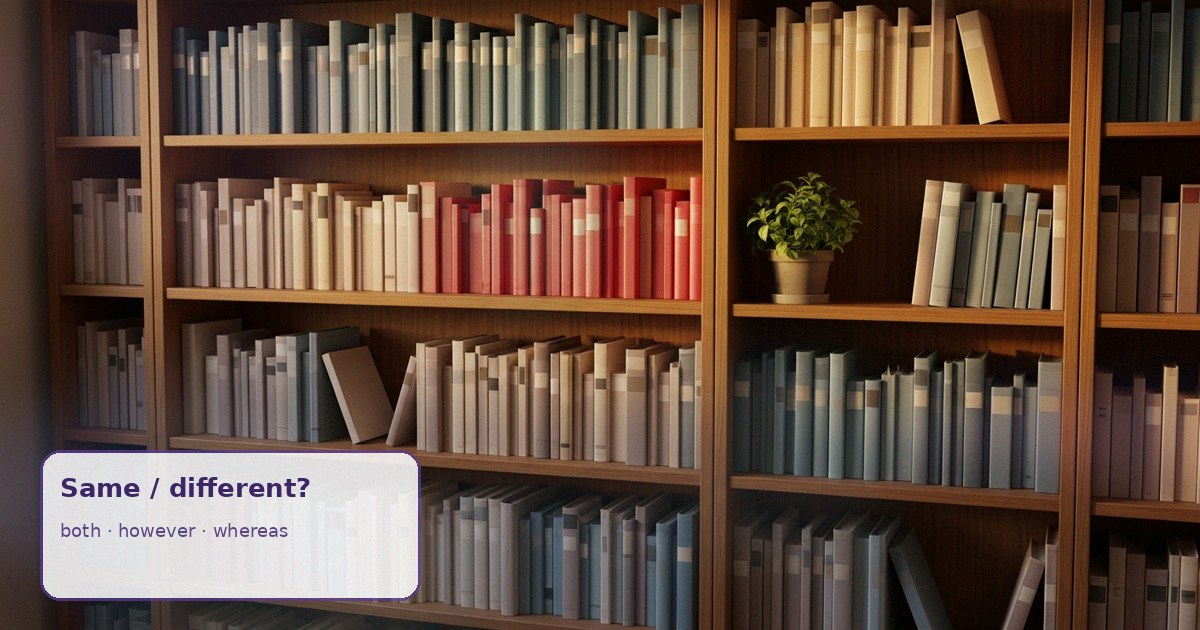
Compare and contrast is a reading comprehension habit: noticing what is the same and what is different between characters, settings, topics, or ideas. After two animal pages, a child might say “Both are mammals, however one lives in water” — naming likeness and difference, not only listing facts. The teach-through is oral first: “How are these the same?” / “How are they different?” before Venn diagrams or worksheet labels. Australian Prep–Year 6 classrooms practise it in both fiction (characters and settings) and nonfiction (topics); it usually deepens in Years 2–6 as signal words grow and children hold two ideas in mind at once.
That is a different job from cause and effect (what made something happen) and from text features (nonfiction signposts). It is also not author’s purpose, not main idea, not summarising, not inference as a full deep dive, and not an essay-writing how-to or a comparing fractions maths page. Fluency (reading fluency, robot reading) frees attention for meaning; it is not compare-and-contrast itself. And this page is not the full comprehension strategies at home umbrella — this page owns compare-and-contrast teach-through, Prep–Year 6 (link phonics when sounding out is the blocker).
Compare and contrast vs cause and effect vs text features vs main idea
Mixing these labels causes homework friction. Keep the tools clear:
| Idea | What it is | Example |
|---|---|---|
| Compare and contrast | Same vs different; signal words like both, similarly, however, whereas; oral first | “Both dogs bark; however one is tiny” |
| Cause and effect | What made it happen / what happened because of that | “It rained, so the match was cancelled” (cause and effect) |
| Text features | Nonfiction signposts (headings, captions, diagrams) | “Heading says Desert animals” (text features) |
| Author’s purpose | Why the writer wrote it (PIE + light explain) | “Mostly to inform us about animals” (author’s purpose) |
| Main idea | What the text is mostly about | “Animals adapt to where they live” (main idea) |
| Summarising | Short retell of the important bits | “Two animals; same class; different homes” (summarising) |
| Inference | Unstated meaning from clues + knowledge | “She slammed the door — maybe angry” (inference) |
| Questioning / predicting / visualising / clarifying / vocabulary / connections | Other meaning habits | Different jobs (questioning, predicting, visualising, clarifying, vocabulary, making connections) |
So compare and contrast is not “what made that happen” and not “why the author wrote this”. It is holding two things side by side and naming likeness and difference. Kitchen shorthand: “How are they the same / different?” (compare/contrast); “What made that happen?” (cause/effect).
What Australian schools mean by compare and contrast
Programs vary. Teachers may say compare and contrast, same and different, alike / unlike, or ask How are these the same? Parent translation: help the child name likeness and difference — without a bedtime quiz that fills every Venn circle before enjoying the story.
Typical moves: notice two characters, settings, or topics; ask How are these the same?; ask How are they different?; try a light signal word (both / similarly / however / whereas); check whether the likeness or difference is stated or lightly implied.
The Australian Curriculum: English expects growing skill with how ideas relate in texts. Follow this fortnight’s classroom language. Year maps: Prep reading, Year 2, Year 3, Year 4, Year 5, Year 6. A Year 1 Phonics Check is about decoding — not a compare-and-contrast quiz.
Decode first (mostly), then name same and different
Working memory is limited. Useful compare-and-contrast talk needs decent decoding (or a calm read-aloud of the key sentences). When almost every word costs effort, “How are these the same?” becomes noise. If sounding out is still fragile, start with phonics, phonemic awareness, tricky / heart words, and decodable readers before pushing Venn labels.
On a tough night: use easier fiction or info pages or a short read-aloud for one same/different question — or free the brain with a calm re-read first (fluency, robot reading). Never use “just guess from the picture” to paper over a word-guessing habit — children still need to engage with the words that carry the likeness or difference.
Oral “how are these the same / different?” — before Venn labels
Compare and contrast sticks better when talk leads the tick-box — same calm spirit as homework without tears.
Oral first (Prep–Year 2 especially): you model (“Both sisters love football; however only one plays on weekends”); invite one How are they different?; enjoy the page.
Then print (as decoding allows): one short paragraph or two short pages; “How are these the same?”; “How are they different?”; try one signal word (both / similarly / however / whereas lightly); if they only invent from the picture without reading, return to the print (guessing). If print or a blank Venn turns tense, go back to oral or read-aloud.
Skip the rigid fill-every-circle quiz. One clear same + one clear different beats a twenty-slot Venn.
Toolkit: both, similarly, however, whereas (and light on the other hand)
One parent sentence that helps: “How are these the same — and how are they different?”
- Both / similarly / alike — names likeness (Both characters are brave)
- However / whereas / but — names contrast (One is shy, however the other is bold; Cats hunt alone, whereas wolves hunt in packs)
- On the other hand (light) — slightly more formal contrast (often Year 3–6) — introduce gently
- Same / different — oral stems when the signal word is missing but the link is clear
Fiction: characters and settings — “Both friends want to win; however only one cheats.”
Nonfiction: topics and facts — “Both planets orbit the sun; whereas Earth has liquid water.”
Headings and captions can help locate the two things to compare (text features); they are not the compare-and-contrast habit itself. Multilingual homes: name same/different in the home language first, then one English sentence with both or however. Sibling habits (cause and effect, author’s purpose, main idea, summarising, inference, and the other meaning habits linked in the table above) can sit beside same/different talk — different jobs. This page is not a persuasive-essay how-to and not a comparing fractions maths deep dive.
Home games (5–10 minutes, keep it friendly)
Stop while playful. Prefer spoken same/different talk before formal Venn worksheets.
- How are these the same? — after two characters, settings, or topics: name one likeness
- How are they different? — name one difference
- Both / however swap — retell the same pair once with both, once with however
- Signal spy — find both, similarly, however, or whereas in one short page
- Fiction pair — two characters or two settings from the same story
- Nonfiction pair — two animals, places, or facts from an info page
- Not cause and effect alone — why-links are cause and effect
- Not text features / purpose / main idea alone — those are text features, author’s purpose, and main idea
- Not summarising alone — short retell is summarising
- Not the whole strategies quiz — one same + one different beats a toolkit barrage (umbrella)
Prefer matched books, library fiction and nonfiction, and short everyday texts. Untaught long chapters invite freeze or invented contrasts.
What "going fine" can look like (generous variation)
By late Prep through Year 6, many children can name a simple likeness and difference after a short passage, try both or however, and (later) notice whereas. Confidence often deepens in Years 2–6 as pairs grow more precise and appear in denser nonfiction.
Timelines vary — multilingual homes included. Soft sketch only. Watch decoding, fluency, cause and effect, text features, and the comprehension strategies set (Prep; Year 2 and up).
When compare-and-contrast talk stays sticky (careful, non-medical)
If same/different talk still collapses after matched pages and light home play — they only list facts about one thing, never hold two ideas side by side, or freeze at every Venn — talk kindly with the teacher. Share concrete examples (“named each animal’s colour but couldn’t say how they were alike”).
Check foundations: phonics, phonemic awareness, decodables, fluency, guessing, and book difficulty. See when to worry about reading, Is my child behind in reading?, and how to help a struggling reader. Hearing and vision checks are ordinary early supports.
This guide does not diagnose dyslexia, speech–language disorders, or any medical or learning condition. Only schools and qualified specialists make those assessments. Tips here are general parent strategies — not a treatment plan or NAPLAN coach.
FAQ
What is compare and contrast in reading?
Naming what is the same and what is different between characters, settings, or topics — often with both, similarly, however, whereas — usually starting with oral How are these the same / different? Not a rigid fill-every-Venn quiz.
Is compare and contrast the same as cause and effect?
No. Cause and effect names what made something happen and what happened because of that. This page owns same vs different side-by-side talk.
Is compare and contrast the same as text features or author’s purpose?
No. Text features are nonfiction signposts. Author’s purpose is why the writer wrote the text. This page owns naming likeness and difference.
Are compare and contrast the same as main idea or summarising?
No. Main idea is what the text is mostly about. Summarising retells the important bits briefly. Compare and contrast holds two things side by side.
How is this different from comprehension strategies at home?
Comprehension strategies at home owns the set. This page owns compare-and-contrast teach-through: oral same/different talk, light signal words, fiction and nonfiction; Prep–Year 6.
Is this an essay-writing how-to or a comparing-fractions maths page?
No. This page teaches reading for compare and contrast in stories and information texts — not a writing program and not comparing fractions maths.
When do Australian schools teach this?
From early oral same/different talk in Prep through denser signal words and nonfiction pairs in Years 2–6. Follow classroom language this fortnight.
Must my child fill every circle on a Venn diagram?
No. One clear likeness and one clear difference that actually fit the text beats a twenty-slot worksheet.
Will endless Venn worksheets fix weak same/different talk?
Rarely. Short oral How are these the same / different? plus one both / however sentence beats bedtime drills.
A calm next step
Compare and contrast clicks with one short page, oral “How are these the same?” / “How are they different?”, a light both / similarly / however / whereas toolkit, and playful fiction and nonfiction same/different talk before Venn worksheets. Try one same + one different tonight. If you also want a low-pressure look at early reading skills at home, Ziado's free check is a one-off, roughly 10-minute adaptive diagnostic with partial results only — no account and no card. The full placement unlocks after signup. It is not a compare-and-contrast quiz, not a dyslexia or speech screen, not medical advice, and not a NAPLAN practice test. Explore Ziado reading afterward if you want adaptive practice. Individual and Family plans start with a 14-day free trial of the full app — see pricing.
Same/different differs from checkable vs opinion — see fact vs opinion for parents.
Same/different differs from first/next/then — see sequence for parents.
Same/different differs from the story’s big idea — see theme for parents.
Same/different differs from first vs third person — see point of view for parents.
Compare characters; what they are like sits in character traits for parents.
Curious which reading skills need practice?
Ziado's free check is a one-off, roughly 10-minute adaptive diagnostic with partial results only - no account, no card. It is not a compare-and-contrast quiz, and not a dyslexia screen.
Start the free reading check