Digraphs explained for parents (Australia)
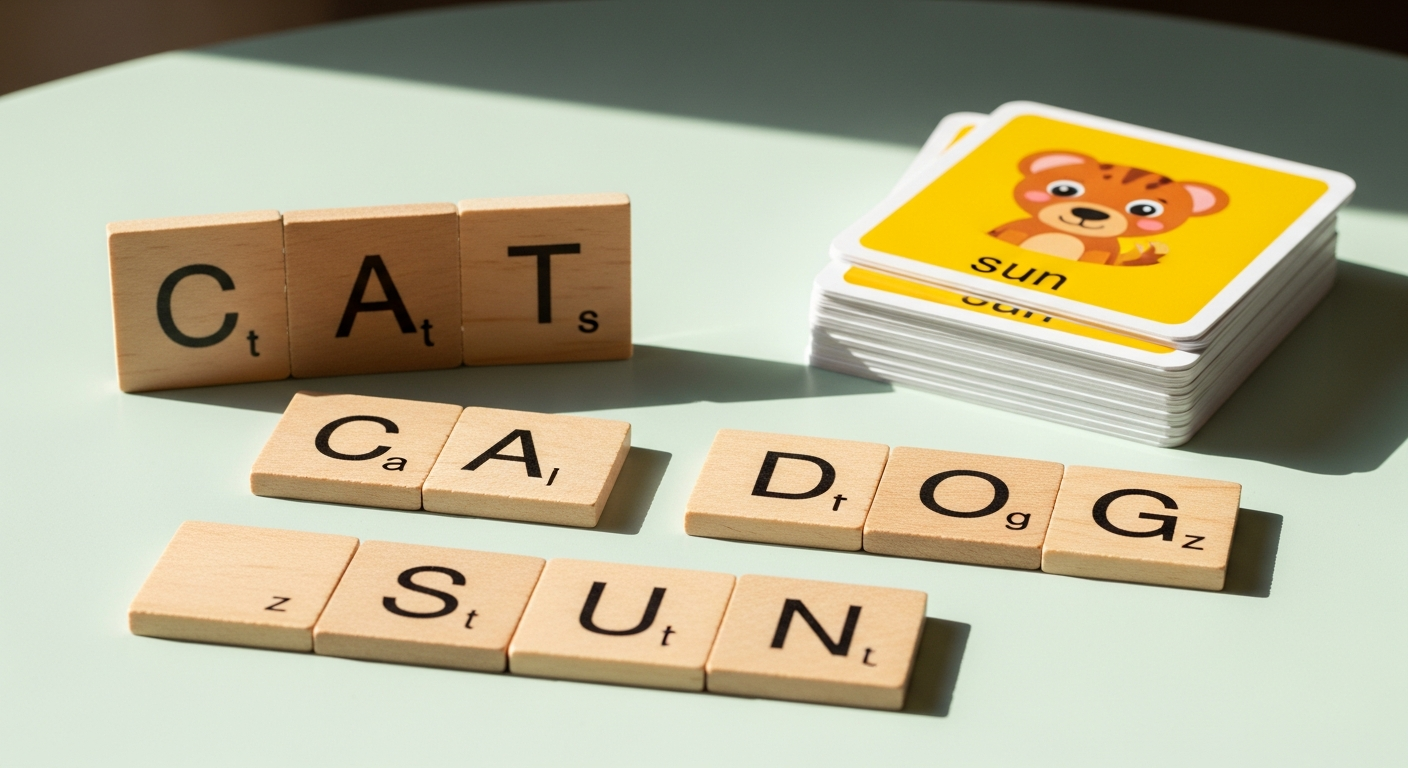
A digraph is two letters that team up to make one sound. When your child meets ship, chip, thin or sing, the jump is not "sound every letter on its own" - it is "see the pair, say the sound". Australian Prep and Year 1 classrooms teach common digraphs (sh, ch, th, ng and friends) right after simple letter–sound matches and phonemic awareness work.
This guide is the calm parent version: clear definitions, the four digraphs that show up early and often, short home games, and a clean line between digraphs and other word-building ideas (blends, morphology). It sits beside phonics explained for parents and feeds straight into decodable readers and the Year 1 Phonics Check.
Digraph vs letter vs blend (the kitchen-table version)
- A letter is a written symbol (s, h).
- A phoneme is one speech sound (/sh/).
- A digraph is two letters that represent one phoneme: sh → /sh/, ch → /ch/, th → /th/, ng → /ng/.
So ship has four letters and three sounds: /sh/ /i/ /p/. Counting letters and counting sounds are different jobs - the same distinction that unlocks phonemic awareness.
A blend (or consonant cluster) is different: two letters, two sounds that slide together. In stop, you still hear /s/ and /t/. In ship, sh is one glued sound - you do not say /s/ then /h/.
Keep that contrast handy. Many homework sheets mix "digraph" and "blend" language; matching what the teacher says beats inventing a parallel system at home.
Digraphs are phonics, not morphology
Digraphs belong in the letter–sound code. They are not meaning chunks.
- Digraph: sh in ship (how we write the /sh/ sound)
- Morphology: un- in unhappy or -ed in jumped (chunks that carry meaning)
Spelling and morphology for parents covers prefixes, suffixes and base words later. Teach digraphs when children are learning to map sounds to print - not as a substitute for phonics, and not as "word parts that mean something".
Why Australian schools teach digraphs early
The Australian Curriculum: English Foundation expects students to learn letter–sound relationships and to blend and segment sounds in simple words. Once children can read many CVC words (cat, sun, hop), teachers introduce digraphs so connected text can include everyday words like shop, chop, that and ring.
In parent language: after "one letter, one sound" feels steady, digraphs unlock a huge pile of real words without guessing from pictures (why children guess words). Exact order varies by school program - ask which digraphs are on this fortnight's focus so home practice matches classroom language.
Prep reading covers the whole Foundation year. Digraphs often deepen through late Prep and Year 1; the Year 1 Phonics Check (where used) includes digraph words and nonsense words that use the same patterns.
The big four: sh, ch, th, ng
You do not need every digraph on day one. A short, over-learnt bank beats a poster nobody uses.
sh → /sh/
As in ship, fish, shop, wish, brush.
Mouth tip: lips forward, quiet "hushing" sound - like asking for quiet. Not /s/ then /h/.
Common early words: she, shop, fish, rush, crash (once blends are also known).
ch → /ch/
As in chip, chop, much, lunch, chair.
Mouth tip: a quick burst that starts like /t/ and finishes toward /sh/. Children often confuse ch and sh; contrast pairs help (ship / chip). Early teaching usually means the /ch/ in chip - other ch sounds (school, chef) come later.
th → /th/ (two common flavours)
As in thin, bath (often quieter/breathy) and this, that, the (buzzier/voiced). Many teachers introduce both as "the th digraph" and refine voicing with listening, not a lecture.
Mouth tip: tongue gently between or just behind the teeth. Model the real th sound rather than swapping to /f/ or /d/ for "ease".
ng → /ng/
As in sing, ring, long, bang, going.
Mouth tip: back of the tongue lifts; the sound hums through the nose. It is one sound at the end of sing - not /n/ then /g/.
Children who segment sing as /s/ /i/ /n/ /g/ are counting letters, not sounds. Gently retap: /s/ /i/ /ng/ = three.
How digraphs fit the reading path
A useful home order (same spirit as school progressions):
- Hear sounds in words (phonemic awareness)
- Link single letters to sounds (phonics) with short CVC practice
- Learn digraphs as one sound, two letters
- Read them in decodable readers that match taught code
- Keep a small bank of tricky / heart words that need an extra look
- Build fluency once decoding is mostly accurate
Digraphs do not replace sounding out - they refine what you sound. When a child sees sh, celebrate "one sound" rather than forcing /s/+/h/.
Home games (5 minutes, no worksheets required)
Stop while it is still friendly. Use the sound, not only the letter name ("/sh/", not only "S-H").
- Digraph detective - on a walk or cereal box, hunt sh, ch, th or ng. Child points; you both say the sound, then try the whole word.
- Same or different? - say ship / chip, thin / fin, sing / sin. Are the first (or last) sounds the same?
- Robot talk with digraphs - you stretch "/sh/ … /o/ … /p/"; child says shop. Then swap: child robots, you blend.
- Sort the cards - sticky notes with sh / ch / th / ng. Say a word (lunch, bath, ring, fish); child slaps the right digraph card.
- Word swap - change ship → chip → chop → shop by swapping one digraph or vowel. Laugh at nonsense (thop) - still great sound practice.
- Endings first for ng - list sing, ring, bang, long. Feel the hum at the end; tap three sounds.
Pair games with books that use taught digraphs. If a reader is packed with untaught patterns, guessing creeps back in - choose decodables that match school sequence when you can.
What "going fine" can look like (generous variation)
By late Prep / Year 1, many children can say taught digraph sounds with thinking time, read and spell a growing set of short digraph words (shop, much, that, sing), segment by sounds (not letter count), and notice digraphs in decodable text without freezing.
Timelines vary - multilingual homes included. Soft sketch only. See reading milestones Prep to Year 2 for the wider early path.
When digraphs stay sticky (careful, non-medical)
If digraphs still feel random after classroom teaching and light home play - sh and ch always swapped, ng split into two sounds, digraph words guessed from pictures - have a kind conversation with the teacher. Share concrete examples ("reads ship as sip", "taps four sounds in sing"). That helps more than "phonics is weak".
Check foundations too: can they hear sounds in spoken words (phonemic awareness)? Are single-letter sounds secure? Digraphs sit on top of those skills.
Use Is my child behind in reading?, how to help a struggling reader, and when to worry about reading for broader next steps with school. Hearing and vision checks are ordinary early supports.
This guide does not diagnose dyslexia, speech disorders, or any medical or learning condition. Only schools and qualified specialists make those assessments. Digraph tips are general parent strategies - not a treatment plan and not a replacement for professional advice.
FAQ
Is a digraph the same as a blend?
No. A digraph is two letters, one sound (sh). A blend is two letters, two sounds that slide (st in stop).
Should we teach letter names or sounds?
For digraph reading, lead with the sound (/sh/). Letter names help later spelling talk ("S-H says /sh/"); mixing them early confuses sound counting.
What about wh, ck, qu, ai, ee?
Those are also digraphs (or related patterns) many programs teach soon after the big four. Follow your school's sequence - this page focuses on sh, ch, th, ng because they unlock so many early words.
Is the a digraph word or a tricky word?
Both can be true. The uses th, and many schools also treat it as a heart / tricky word. Celebrate the digraph and give the word the extra look it needs.
Do digraphs replace morphology?
No. Digraphs are sound spellings. Morphology (spelling and morphology) is meaning chunks on top of phonics.
Will flashcards alone fix digraph mix-ups?
Rarely. Short contrast games (ship / chip), oral blending, and digraphs in connected decodable text beat endless isolated cards.
A calm next step
Digraphs click with clear teaching, playful sound work, and books that match the code - not with panic or giant worksheets. If you also want a low-pressure look at early reading skills at home, Ziado's free check is a one-off, roughly 10-minute adaptive diagnostic with partial results only - no account and no card. The full placement unlocks after signup. It is not a digraph quiz, not a dyslexia screen, and not a school assessment. Explore Ziado reading afterward if you want adaptive practice through sounds and early connected reading. Individual and Family plans, if you continue later, start with a 14-day free trial of the full app — see pricing for current plans.
CVC blending (consonant–vowel–consonant) is the steady step before digraphs — see blending CVC words for parents.
Digraphs live inside syllables — for clap-and-chin beats first, see syllables explained for parents.
Digraphs are print; rhyming starts as sound play — see rhyming explained for parents.
Digraphs are one sound in print; segmenting hears the sounds first — see segmenting phonemes explained for parents.
Curious which reading skills need practice?
Ziado's free check is a one-off, roughly 10-minute adaptive diagnostic with partial results only - no account, no card. It is not a digraph quiz, and not a dyslexia screen.
Start the free reading check